






What Similarweb’s latest report reveals about apps after the AI explosion, and what it means for businesses.
The barrier to creating an app has effectively disappeared, with AI-assisted development tools meaning that an app can go from idea to App Store in hours. The result? A flood of new apps at a scale we’ve never seen before.
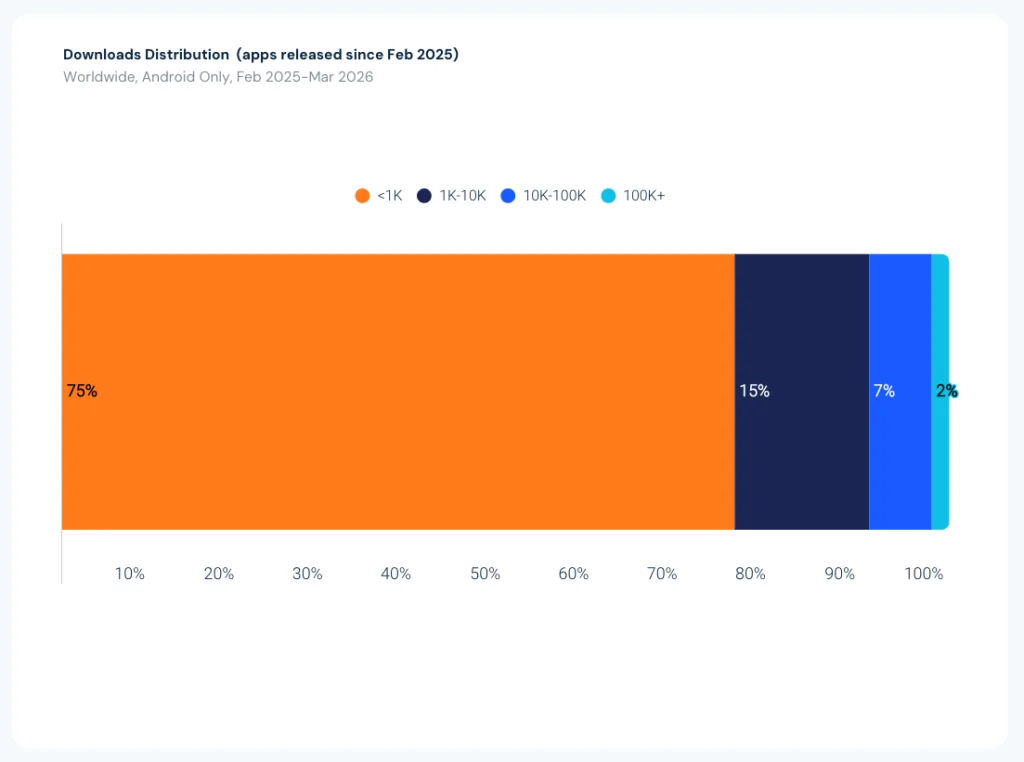
But, Similarweb’s latest report uncovered an uncomfortable truth: the vast majority of new apps won’t survive. As much as 75% won’t reach 1k downloads and only 2% will cross the 100k mark. That’s a data-driven take, not just a pessimistic one.

So for anyone with an app today, that reality changes just about everything you think you know about the market.
More apps just means more competitive pressure
According to Similarweb data, monthly app releases reached nearly 120,000 in early 2026, up roughly 50% year over year – showing just how drastically the app market has exploded.
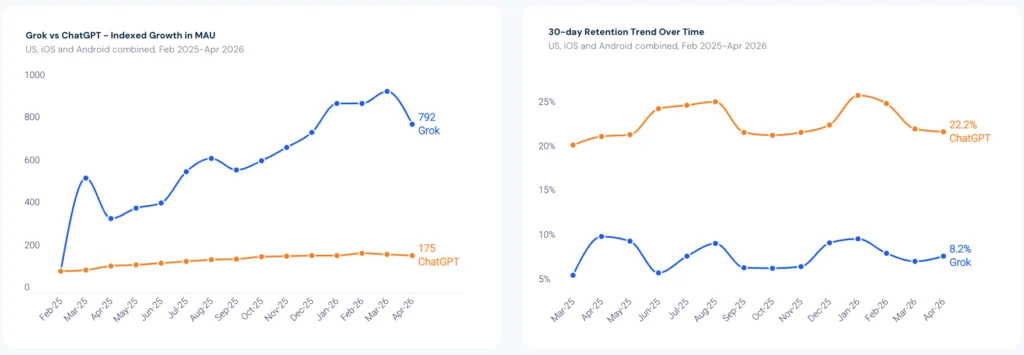
Unfortunately, more downloads across more apps doesn’t mean more success for each one. Even the most popular breakout apps like Grok and ChatGPT are struggling to hold on to users. Grok’s downloads look great, but retention sits at just 8%. It just means the fight for retention, revenue and ranking has never been tougher – for everyone.

When thousands of new apps flood the app stores, the old system simply can’t handle the influx and the rules have to change. Basing decisions on instinct about what users want, rough download benchmarks, and light competitor tracking will no longer cut it.
The winners will be the best-informed
In an oversaturated market like this, good app intelligence is the key differentiator for businesses. Knowing which apps are genuinely gaining traction – versus which ones spiked on launch day and then quietly faded away – is the difference between a smart strategic decision and an expensive mistake.
This is exactly the gap Similarweb App Intelligence is built to close. By tracking store downloads, active users, revenue estimates, engagement metrics, retention rates and SDK data across every major category on both the App Store and Google Play, it gives a wide range of teams the data they need to keep on top of a market that’s not slowing down.
Whether you’re benchmarking your own app’s performance, tracking a competitor’s movements, or hunting for missed opportunities before someone else does, the data is there. The question is whether you’re looking at it.
What this means in practice
The apps that will win the post-AI explosion won’t necessarily be the most technically impressive or the best funded. They’ll be the ones built and grown by teams that understand the full picture: where the market is moving, what their users actually look like, which acquisition channels are driving sustainable growth and where competitors are actually gaining ground.
That kind of clarity doesn’t come from intuition. That requires the kind of granular, independent, real-time app data that Similarweb’s App Intelligence platform has spent years building.
Your winning strategy starts here
Start your free App Intelligence trial here.
Download the full app data report here.



Comments
Loading…