






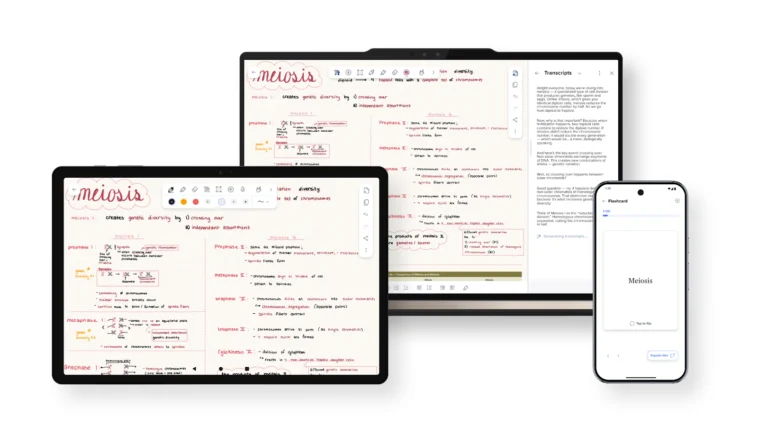
Google introduced a wide range of Android announcements during Google I/O 2026, placing AI-assisted development, agent workflows, and cross-device experiences at the center of its latest platform strategy.
The updates span developer tooling, generative AI integrations, adaptive interface frameworks, and operating system changes arriving with Android 17, while extending Android support further into laptops, XR hardware, vehicles, TVs, and large-screen devices.
Android Development Receives New AI Agent Capabilities
Among the major releases was the stable rollout of Android CLI, a command-line toolkit designed to connect Android development workflows with AI agents and large language models.
The tool allows AI systems to perform Android-specific tasks including semantic code analysis, Jetpack Compose rendering, warning inspection, and UI testing processes. Google said the release also supports “Journeys,” enabling agents to run end-to-end interface tests.
Google additionally expanded app generation capabilities within Google AI Studio, where developers can now create native Android applications using prompts. Generated apps are built with Kotlin and Jetpack Compose and can be tested through an embedded Android emulator before deployment.
The company also introduced Android Bench, a benchmarking environment designed to measure AI model performance across Android development tasks. The leaderboard now includes open-weight models such as Gemma 4.
For migration workflows, Android Studio is receiving a new Migration Assistant, aimed at converting iOS, React Native, and web projects into native Android applications by automating UI rebuilding and asset transfers.
Gemini Integrations Expand Across App Development
Google outlined several additions tied to Gemini and generative AI development.
A preview version of Gemini Nano 4 was introduced for on-device functions including summarization and information extraction, while Firebase AI Logic expands access to Gemini cloud capabilities with grounding options connected to maps, URLs, and web search.
The company also announced:
- A hybrid inference framework combining local and cloud AI processing
- A new Agent Development Kit (ADK) for Android
- Agent communication standards including AG-UI and A2UI
- Expanded testing for AppFunctions, allowing applications to expose capabilities directly to assistants and AI agents
AppFunctions remains in limited preview, though developers can begin experimenting with APIs and integration tools.
Compose Becomes Android’s Primary UI Framework
Google confirmed a broader transition toward Compose-first Android development, while traditional View-based systems move into maintenance status.
The shift comes as Android expands support across foldables, tablets, XR devices, cars, connected displays, and Google’s newly introduced Googlebook category.
Google said the Android ecosystem now includes more than 580 million large-screen devices, with users operating across multiple screens generating higher app engagement and spending levels.
Updates tied to adaptive experiences include:
- Jetpack Navigation 3 enhancements
- Experimental Grid and FlexBox layouts
- Expanded input support beyond touch interactions
- Desktop emulation tools for Googlebook testing
- CameraX updates for adaptive camera previews
Widget development is also being unified through Jetpack Glance, which now extends across mobile devices, Wear OS, and automotive interfaces.
Cars, XR, Media Apps, and TV Ecosystems Receive Updates
Google announced additional tools for automotive development through updates to Android Auto and Android Automotive OS.
The company is adding new media templates and expanding parked experiences with video playback support on Android 17-powered devices.
In XR, Android XR Developer Preview 4 moves core libraries closer to beta while broadening hardware programs tied to display glasses and immersive devices.
Media developers also received several platform additions, including:
- CameraXViewfinder support for adaptive previews
- Media3 AI Effects for editing workflows
- Hardware-aware encoding recommendations through CodecDB
- ExoPlayer scrubbing improvements
- Media3 Transformer enhancements
For Google TV, developers are being encouraged to prepare for future pointer-based remote interactions and migrate to the Engage SDK, which will gradually replace older discovery systems.
Google Play Adds Short-Form Discovery and AI Store Tools
Google Play updates focused on discoverability and storefront automation.
The company introduced Play Shorts, a short-form video format designed to surface apps directly within Play Store experiences.
App discovery is also expanding beyond the store itself, with Gemini integrations bringing app recommendations into Android and web search experiences.
Additional Play updates include AI-generated store listings, automated localization workflows, and catalog management tools designed to handle pricing and inventory changes at scale.
Android 17 Introduces Performance and Privacy Changes
Google also detailed changes arriving in Android 17, which include performance optimizations and new privacy controls.
Among the updates:
- Lock-free MessageQueue architecture
- More frequent lightweight garbage collection cycles
- New memory analysis tools
- Background audio protections
- SMS OTP security updates
- Restricted local network access
- Default certificate transparency
- Mandatory support for large-screen resizability
- New contact picker APIs to reduce permission access
Testing is now available through Android 17 beta builds and updated emulator images.




Comments
Loading…