






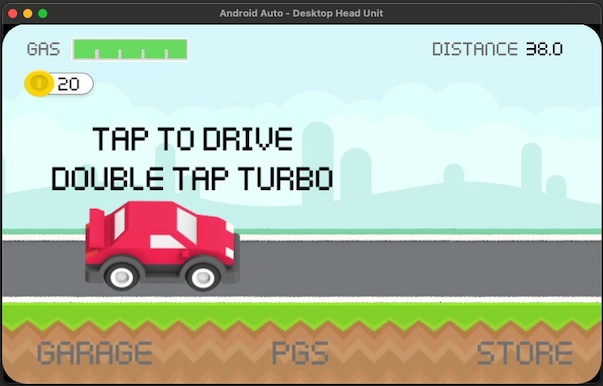
Google has moved the games category for Android Auto and Android Automotive OS with Google built-in out of beta, allowing developers to publish compatible Android games to open testing and production tracks on Google Play.
The general availability launch expands a program that previously involved early-access partners offering games designed for use while vehicles are parked. Developers can now adapt existing Android titles for car displays and distribute them through Google Play, provided they meet Google’s technical and safety requirements.
Games are treated as parked apps, meaning they cannot be used while a vehicle is moving. Android Auto and Android Automotive OS automatically block these activities when the vehicle is in motion or when driving-related user experience restrictions become active. Game audio must also stop when driving begins and cannot be resumed until the vehicle is parked again.
For Android Auto, games are supported on phones running Android 15 or later. Developers need to identify their apps as games in the Android manifest and declare support for the car launcher. Android Automotive OS support requires developers to declare the automotive hardware feature, with configuration requirements varying depending on whether the title is distributed through the mobile or dedicated Automotive OS track.
Google is also requiring games to handle transitions between parked and driving states. If gameplay is interrupted because the vehicle begins moving, reopening the title from the home screen should restore its previous state as closely as possible. Developers are also expected to test for responsiveness and prevent freezes or stuttering during gameplay.
The move brings both touch and game controller input into the car gaming experience. Car displays support touchscreen controls, while developers whose titles work with gamepads can declare controller support in their app manifest. Google says doing so can improve a game’s visibility on Google Play for users looking for controller-compatible titles.
Screen adaptation is another requirement as automotive displays vary considerably in size and orientation. Games are expected to support configurations ranging from portrait screens to wide landscape displays and run full screen without letterboxing or pillarboxing.
Developers can test Android Auto compatibility using Google’s Desktop Head Unit, while Android Automotive OS titles can be evaluated through the platform’s emulator and bundled hardware profiles.
Once the required changes have been implemented, developers can opt into the Android Auto and Android Automotive OS form factors through Google Play Console. Games are reviewed against Google’s car app quality guidelines before being approved for open testing or production.
The expansion gives Android game developers another distribution surface without requiring games to operate while a vehicle is being driven. Instead, Google is positioning car screens as an entertainment platform during periods when vehicles are stationary, such as charging stops or curbside pickup waits.
With the category now generally available, Google’s automotive app ecosystem is expanding beyond navigation, communication and media apps to include a wider range of gaming experiences built around parked use.



Comments
Loading…