



 Jordan Bevan
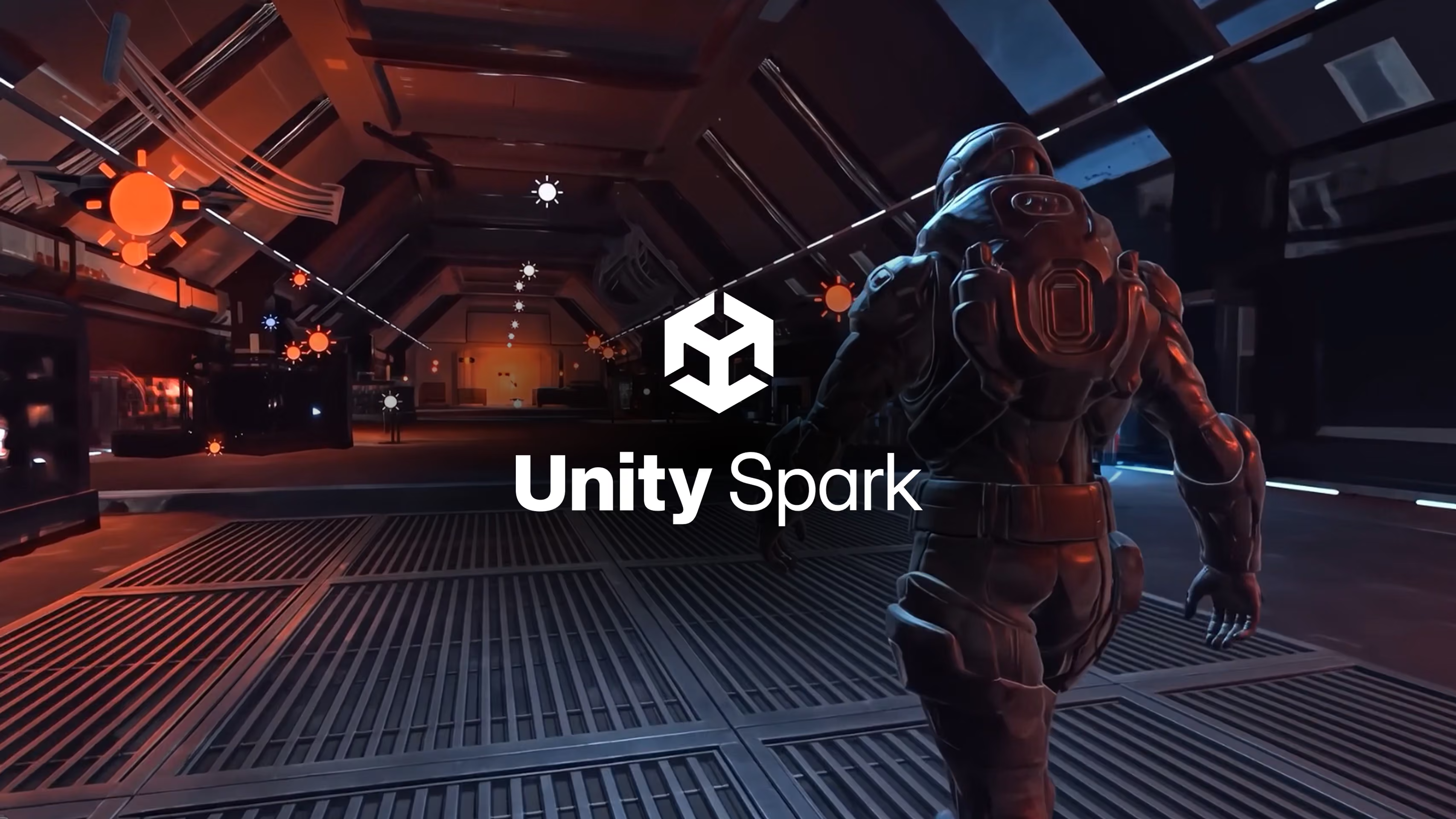
Unity has partnered with Google on a new AI-powered game creation platform that will allow users to generate and customize playable games through natural language, with a broader Unity Spark creation experience scheduled to launch later this year.
The partnership combines Google’s AI technology and consumer ecosystem with Unity’s game engine and runtime. At the center of the initiative are two connected products: Google’s experimental Playground, which is available now, and Unity Spark, a new browser-based game creation platform currently listed by Unity as coming soon.
Playground provides the first stage of the experience. Available to users aged 18 and over, the platform allows people to create and modify playable games using natural-language prompts without writing code.
Google and Unity plan to expand that concept with Spark later this year, providing additional creation capabilities while maintaining a web-based interface intended to make game development accessible without requiring users to begin inside a traditional game engine.
According to the companies, Playground and Unity Spark will work together to provide access to more advanced game mechanics, higher-fidelity 3D experiences and Unity’s runtime. The idea is to let creators begin with a text prompt and then move into more detailed editing as their projects develop.
Unity’s dedicated Spark page describes the product around a workflow of prompting a game, refining it in an editor and eventually publishing the result. The company is currently accepting registrations for a waitlist.
Games already displayed as examples on the Spark website include Space Corridor, a third-person science-fiction shooter, alongside projects called Horror Story, Emberwell and Robot Race.
The platform represents a different approach from Unity’s existing AI development tools, which are primarily designed to assist developers already working with Unity projects.
Unity currently offers an in-editor AI assistant, an AI Gateway for connecting third-party agents, an MCP server and an official plugin for external coding agents. Those tools operate within more conventional Unity development workflows and require Unity 6 or later.
Spark, by comparison, is positioned around browser-based creation and natural-language interaction, lowering the amount of technical setup required to begin making a playable project.
The Google partnership also extends beyond game generation itself.
Users will be able to sign into the new ecosystem with their Google Play Games profiles, giving creations access to features including leaderboards, multiplayer matchmaking and community functionality. Public Playground projects will also support social interactions such as sharing, liking and engagement between players and creators.
Google plans to surface selected Playground creations across its consumer network, providing another distribution route for games produced through the platform. The companies have not yet detailed exactly which Google products will be used to promote those creations or how selection will work.
Distribution is a significant part of the partnership because the platforms are being designed not only to generate prototypes but also to provide a path for creators to publish and reach players.
Unity’s existing engine supports deployment across mobile, PC, console, web and extended reality platforms. The companies said Spark will use the flexibility of the Unity runtime, although detailed publishing options and platform availability for Spark-created games have not yet been announced.
The initiative comes as Unity broadens its use of AI across game development.
Its current in-editor assistant can work with project context, including scenes, GameObjects and components, while the company’s MCP and CLI tools allow external AI coding agents to interact with the Unity Editor. Unity has also released official integrations intended to connect agents directly with its development environment.
Spark moves that strategy toward a different audience by making AI the starting point for game creation rather than an assistant inside an existing development project.
Instead of requiring a creator to set up a Unity project and then use AI to help write code, generate assets or modify scenes, the new platform starts with a natural-language description and produces an interactive experience that can subsequently be edited.
That approach places Unity and Google within a growing category of AI tools attempting to generate interactive experiences from prompts, rather than limiting generative AI to individual development tasks such as coding, artwork or dialogue.
For Unity, the platform also creates a potential route between simplified AI game creation and its broader development ecosystem. The companies say creators will be able to start with Playground and move toward the more advanced capabilities available through Unity Spark and the Unity runtime.
The announcement does not specify pricing for Spark or provide a firm public launch date. Unity currently labels the platform as “Coming Soon,” while the joint announcement says the expanded Spark experience will arrive later in 2026.
Google’s Playground, meanwhile, is available now as the experimental entry point to the companies’ new AI game creation ecosystem.


Comments
Loading…