



 Jordan Bevan
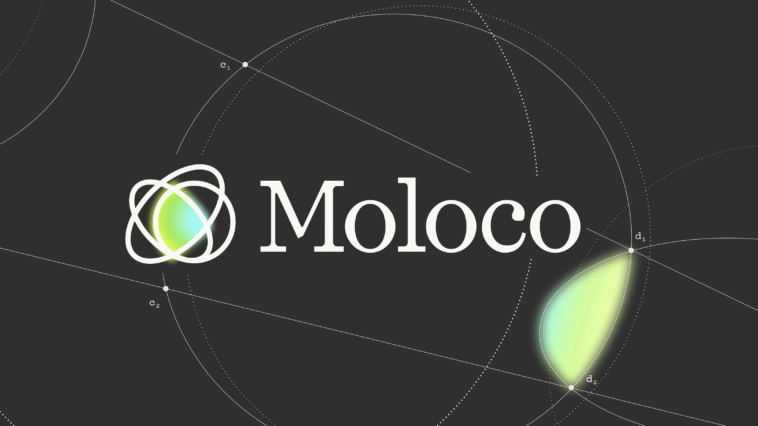
Moloco has introduced a new global brand identity as the AI advertising company looks to reflect its expansion across mobile advertising, connected TV, retail media and marketplaces.
The new identity was developed with design consultancy Pentagram and centers on a redesigned logo made up of three overlapping circles. Moloco describes the circles as lenses that represent how its AI systems process multiple sources of information before making an advertising decision.
The rebrand comes more than a decade after Moloco was founded in 2013 and follows the company’s expansion from mobile performance advertising into a broader range of advertising technology products.
Moloco says its technology now has the potential to reach more than two billion people per day across over 2.9 million independent apps, based on internal estimates of bid-request activity across its exchange partners and proprietary SDK.
The company’s core advertising business, Moloco Ads, remains focused on performance advertising across the open internet, while its wider portfolio now includes connected TV and commerce media products for retailers and marketplaces.
At the center of the redesigned identity is Moloco’s Compound Ad Recommendation Architecture, or CARA, the AI system behind its products.
CARA processes signals from users, publishers, advertisers and creative assets through a collection of specialized models. Those models progressively narrow the available information into a decision about an individual advertising opportunity.
Moloco is using the concept as the basis for its new logo. The three circles represent separate lenses, with each layer contributing another perspective before reaching a focal point.
The visual concept also plays on the industry’s frequent description of artificial intelligence as a “black box.” Moloco is instead using the lens as a metaphor for turning a large and fragmented collection of advertising signals into a specific decision.
Pentagram partner Natasha Jen said the design team sought to translate Moloco’s technical operations into a visual system that reflects how the company identifies patterns and connections across large amounts of information.
Moloco CMO Paul D’Arcy said the company’s previous identity had not developed at the same pace as its advertising business.
According to D’Arcy, Moloco has established a presence within the advertising industry but had an opportunity to develop a clearer brand identity around the technology underlying its products.
The redesign extends beyond the company logo.
Moloco has introduced a broader visual system covering typography, colors, icons, illustrations and data visualization, designed for use across its advertising, research, events, product interfaces and corporate communications.
The company says the system was also designed around its international operations. Its website serves customers in seven languages, requiring the design framework to support different languages, typography and local market requirements.
Moloco has launched a redesigned website alongside the new identity.
The company’s updated positioning uses the line “Built for the hardest problems in advertising,” reflecting its focus on applying machine learning to advertising environments outside major walled gardens.
Unlike advertising ecosystems where one platform can control inventory, user data and measurement, the open internet involves multiple exchanges, publishers, advertisers and measurement providers.
Moloco’s advertising technology is designed to make bidding and optimization decisions across that fragmented supply.
The company has increasingly extended that model into additional advertising channels.
Earlier this year, Moloco launched Performance CTV for app marketers, applying its performance advertising technology to connected television. The product uses attribution through advertisers’ mobile measurement partners and optimizes CTV impressions toward app marketing outcomes.
Moloco has also expanded its commerce media business, which provides advertising infrastructure to retailers and marketplaces seeking to operate their own ad businesses.
That expansion helps explain the timing of the new identity. Moloco’s original positioning was closely associated with mobile app performance marketing, while its current product portfolio covers a broader range of advertising environments.
The company has also been providing more information about the AI architecture behind its products. In August, Moloco published additional details about CARA and how its compound model structure is used for performance advertising.
The new branding brings that technology into the company’s external identity, using the lens system as a visual representation of how CARA moves from large sets of signals toward individual advertising decisions.
For mobile marketers, the rebrand does not introduce changes to Moloco’s advertising products or campaign mechanics. Instead, it reflects a broader repositioning of the company as its performance advertising technology moves into areas beyond its original mobile app acquisition business.
With connected TV, commerce media and open-internet advertising becoming larger parts of its portfolio, Moloco is using the new identity to place its AI infrastructure—rather than a particular advertising channel—at the center of its positioning.


Comments
Loading…