


 Sophie Blake
Apple is expanding the subscription options available to App Store developers with new Bundles, Suites and multiseat purchasing capabilities, allowing subscriptions to cover multiple apps, developers and users through Apple In-App Purchase.
The changes are part of Apple’s subscription updates for iOS 27 and broaden the App Store’s existing model beyond subscriptions typically purchased and used by an individual customer.
Apple is asking developers interested in the new Bundles and Suites capabilities to begin preparing their apps by adopting StoreKit 2 for Apple In-App Purchases.
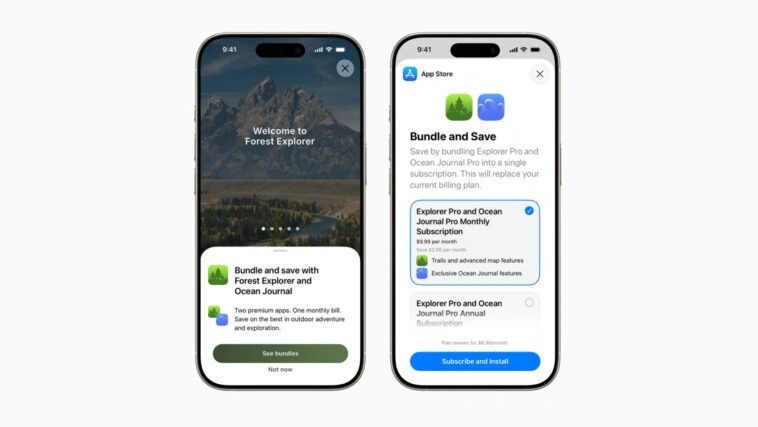
Bundles will allow multiple subscriptions to be combined into a single purchase. The subscriptions included in a Bundle can belong to one app, span multiple apps from the same developer or even include apps from multiple developers.
That could allow developers and publishers operating several subscription products to package them together rather than requiring users to purchase each subscription independently.
The cross-developer option also introduces the possibility of separate companies combining eligible subscriptions into one App Store purchase, extending the model beyond bundles created entirely within a single developer account.
Suites, meanwhile, work differently. Instead of combining multiple subscriptions, a Suite provides a single subscription that can be used across a collection of apps belonging to the same developer.
For developers with multiple apps built around related services or content, the model creates a way to provide access across their portfolio through one subscription.
Apple will control the App Store purchase experience for both models. The purchase interface will show users the apps included in a Bundle or Suite and provide access to the associated subscription content.
Bundles and Suites are scheduled to become available later in 2026 on iOS 27, iPadOS 27, macOS 27 and tvOS 27 or later.
Developers cannot automatically begin offering the new configurations. Apple has opened a request process that requires developers to review eligibility and technical requirements and submit a request for access.
Alongside Bundles and Suites, Apple is expanding subscriptions beyond the traditional one-user-per-purchase model through multiseat purchasing.
Multiseat purchases allow organizations or individual subscribers to buy several seats for the same subscription through a single Apple In-App Purchase.
Apple is dividing the capability into two models: Volume Purchasing and Group Purchases.
Volume Purchasing is designed primarily for organizations. Businesses and educational institutions using Apple Business Manager or Apple School Manager will be able to purchase subscription seats through a single transaction and assign those seats using a device management provider.
The model gives developers another route for distributing subscriptions to workplaces and educational organizations without requiring each employee, student or other user to independently subscribe.
Apple says Volume Purchasing will launch on October 22, 2026.
Group Purchases are aimed at smaller or less centrally managed groups. A subscriber will be able to purchase multiple seats through one Apple In-App Purchase and then invite other users to join the subscription.
Apple will handle the invitation and seat-assignment process.
The system could be used by small businesses, individual company departments, work teams or groups of collaborators that want shared access to a subscription without using a traditional enterprise procurement process.
Apple says Group Purchases will launch this winter.
Developers can begin preparing for multiseat subscriptions immediately. As of today, multiseat purchases are enabled by default for subscriptions in App Store Connect.
Developers retain control over whether their subscriptions participate. Multiseat purchasing can be disabled entirely or managed separately across the App Store, Apple Business and Apple School Manager.
The change is notable for subscription app developers because it expands the potential customer unit from an individual user to a group or organization.
Historically, developers targeting business customers have often needed separate sales, billing and account-management systems to support multiple users. Apple’s new purchasing options bring some of those scenarios into the App Store’s native subscription infrastructure.
The addition of Bundles could also affect how subscription developers package and cross-promote products. A developer operating several apps can potentially sell their subscriptions together, while the ability to create Bundles spanning multiple developers introduces another type of commercial relationship within Apple’s In-App Purchase ecosystem.
Suites provide a different route by allowing developers to structure multiple apps around a single recurring subscription rather than maintaining separate subscriptions for each product.
For mobile subscription businesses, the result is a broader set of monetization configurations within the App Store: developers can sell individual subscriptions, combine several subscriptions into a Bundle, provide one subscription across several apps through a Suite, or sell multiple seats to groups and organizations.
The rollout will take place in stages. Multiseat purchasing controls are already available in App Store Connect, Volume Purchasing arrives on October 22, Group Purchases follow this winter, and Bundles and Suites are scheduled to become available later this year across Apple’s latest operating systems.

Comments
Loading…